- Is this still a good time?
- Posts
- Are You Unprepared For The Job
Are You Unprepared For The Job
Who isnt?

Mike Peditto
January 21, 2026
In partnership with

AI in HR? It’s happening now.

Deel's free 2026 trends report cuts through all the hype and lays out what HR teams can really expect in 2026. You’ll learn about the shifts happening now, the skill gaps you can't ignore, and resilience strategies that aren't just buzzwords. Plus you’ll get a practical toolkit that helps you implement it all without another costly and time-consuming transformation project.
As a reminder: Ads are what keeps the newsletter sustainable and free, a simple click can go a long way to supporting me
Did Someone Forward this to you?
This Week’s Breakdown
Why 73% of Recruiters Feel Unprepared for 2026
(And Why That’s Not an AI Problem)
I’m back, and on a new day! Moving forward expect this newsletter to come every Wednesday, which will give me a chance to really break down some great topics from Tuesday’s podcast release!
After a month off, I wanted to come back with something that actually matters.
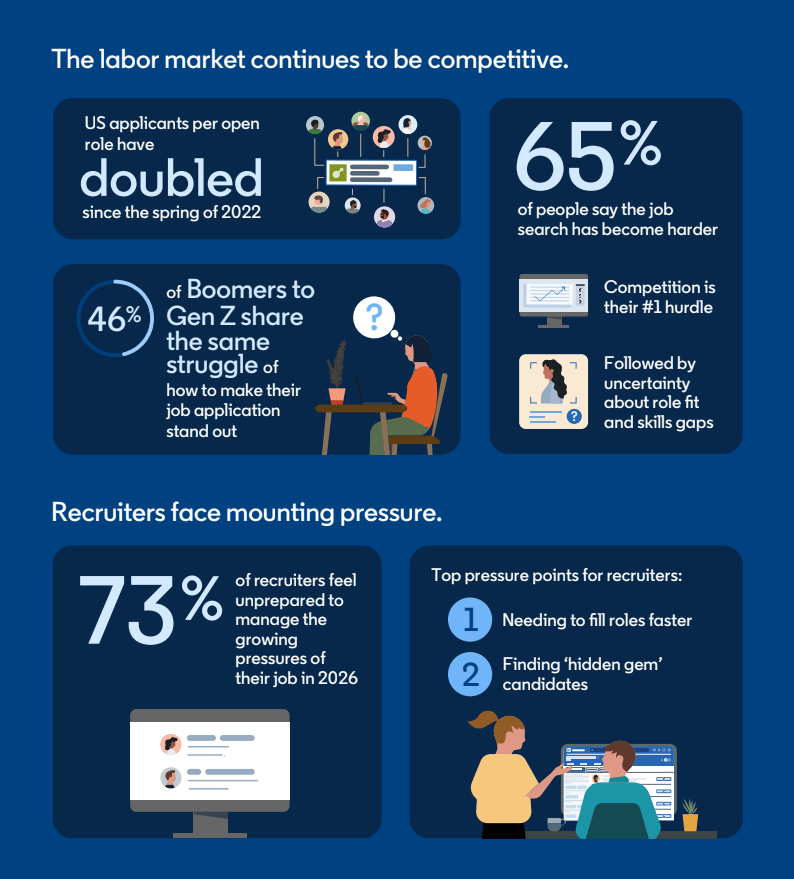
This LinkedIn stat stopped me cold: 73% of recruiters say they feel unprepared to manage the growing pressures of their job in 2026
WTF is a hidden gem?
On the surface, that sounds like another “everything is changing too fast” headline.
But when Brian Fink and I unpacked it on the season 2 premier of podcast, it became clear this isn’t about the future.
It’s about what we quietly lost over the last few years.
This is an Institutional Knowledge Gap.
Brian made a point that a lot of people don’t want to say out loud:
That 73% number is indicative of a workforce that never learned how to do the job properly in the first place.
Between layoffs, churn, and the great reshuffling of recruiters over the last five years, the industry lost an enormous amount of institutional knowledge. Senior recruiters left corporate, midlevel recruiters were promoted too fast. and juniors were hired into chaos. And if you’ve been reading and listening to the podcast you know I have discussed the problems this is going to cause several times…now we just have data on it.

Brian and I love Data
Remote Work Didn’t Break Recruiting, But It Exposed a Maturity Gap
Brian described this perfectly: a maturity gap.
You now have recruiters with three years of experience whose entire careers have been remote-first. They never sat next to a senior recruiter, never overheard hard hiring manager conversations, never learned how to push back live.
That’s not their fault.
But it does help explain why so many feel unprepared.
LinkedIn’s data highlights two main pressure points:
Needing to fill roles faster
Finding “hidden gem” candidates
So naturally, we asked the obvious question on the podcast:
What the hell is a hidden gem?
Brian’s answer was blunt: it’s a purple squirrel. A unicorn. A fantasy.
My version was even more grounded in the reality:
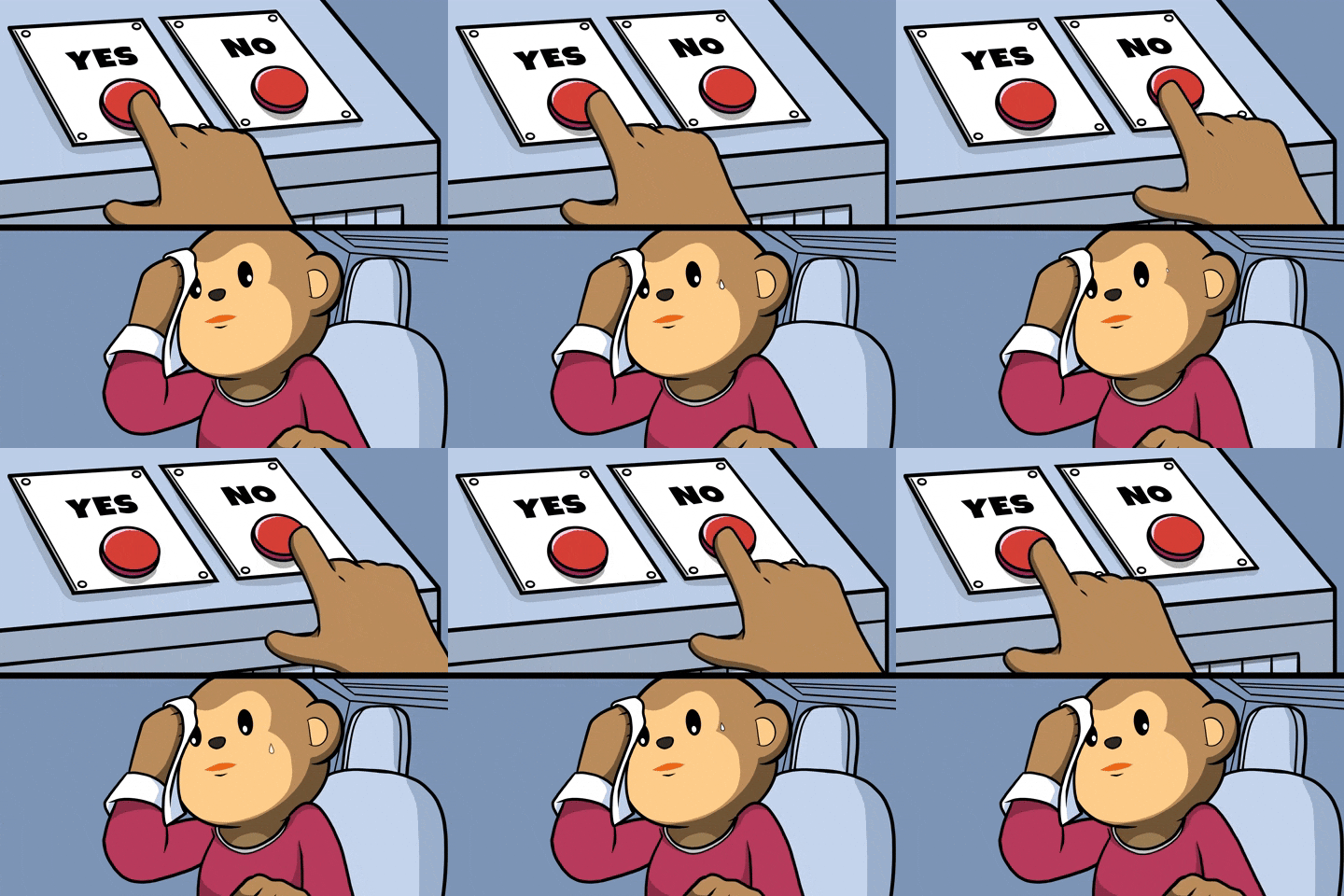
A hidden gem is what hiring managers ask for when they’re never happy and don’t want to make a decision.
How hiring decisions get made
The Real Skill Recruiters Are Missing: Saying No
This is where the conversation really landed.
Brian said it outright: recruiters should be in the “no business.”
If you can’t say no, Brian says you’re not recruiting, “You’re an order taker with a LinkedIn license.” (Side note, it’s funny how much that line sounds like AI wrote it but I promise Brian said it on the podcast)
Being useful rather than just agreeable requires:
Boundaries
A backbone
The ability to tell a hiring manager, “That won’t get you the talent you want.”
And yes, hiring managers can be delusional:
20 years of experience in a 27-year-old
A six-week search done by Friday
Perfect fit, zero compromise
Brian calls it recruiting malpractice to say yes to something like that, yet so many recruiters do.
Brian argued that saying no faster actually speeds hiring up, because no protects you from fantasy land recruiting.
Why So Many Recruiters Feel Unprepared
I said this on the podcast, and I’ll say it again here:
A lot of recruiters don’t feel confident pushing back, especially when the hiring manager has more domain expertise than they do.
And that lack of confidence turns into this feeling of being “unprepared.”
Not because they don’t work hard or don’t care, but because no one taught them how to stand their ground without blowing up the relationship.
Recruited in the Wild
Seen on LinkedIn, overheard in Slack, or posted without shame.
I have to be honest with you follks, I’m starting to feel like this segment has ran its course. Are you tired of links and breaking down the nonsense of LinkedIn? Because I’m tired of diving into the LinkedIn nonsense?
Let me know if you think, maybe it’s time for a different segment in this newsletter than rehashing old LinkedIn arguments.
Accrued Time
A weekly check-in on what I’ve got going on behind the scenes, events, projects, and life outside the req pile.
I hope you all had a wonderful break, the month off from writing and posting podcasts felt great…although, not healthy in any way for us as the Flu is no joke this year and 2 young kids did not make it fun.
A reminder that TA Week is coming up in just a few weeks in San Diego. Brian and I will both be speaking there, Brian’s talk is about being in the no business, something he talked about a ton on the podcast this week, I think it may be worth the trip just to hear!
Season 2 of the Pod is back!
I talked about it a ton in the episode so be sure you are checking out the great episode Brian Fink and I recorded on the day this LInkedIn data was made available!
Cope of the Week
Because it’s either this or scream into a pillow.
If you’re a recruiter right now and feeling behind, unprepared, or not ready to handle the pressures of the job, which is many of you based on this data:
Do not ever forget that you are working in a market that quietly removed the training wheels, the guardrails, and most of the senior voices, then asked you to go faster.
The cope isn’t trying to know everything.
It’s getting comfortable with knowing what to push back on.
You don’t need to win every argument with a hiring manager. You need to be clear on which ones actually matter. The role definitions, the tradeoffs, the timeline, the difference between “nice to have” and “fantasy.”
YOU DO NOT WORK FOR THE HIRING MANAGERS. THEY ARE NOT ABOVE YOU. YOU DO NOT REPORT TO THEM….Repeat this mantra to yourself
Practice saying no, practice pushing back, practice standing up for what you know is best for the team.

Forward this to someone in TA who's barely holding it together.
Reply